 |
| The Local Time is Friday, 19-Apr-2024 19:31:51 CEST |
The Broadway Group |
|
|||
| YOU ARE HERE: Main Home Page > Arts Home Page > Broadway Artists Group |

|
|
 |
||||||||||||||||||||||||||||||||||||||||||||||||||||||||
The village of Broadway is today - as it was a century ago - a popular place for
Broadway, then little known and remote from the railway, was the home of a small colony of artists, many of whom were, like Sargent, expatriate Americans. It was here that Sargent painted what was later to become one of his best loved pictures, Carnation, Lily, Lily, Rose. Broadway was 'discovered' by the American
illustrator and painter Francis Millet, in 1885 It was
then - and still is - an idyllic spot at the extreme
south-eastern corner of Worcestershire, tucked
into the foot of the Cotswolds overlooking the Vale
of Evesham. Its long main street, lined with 16th and 17th-century stone cottages, leads to the
village green. This was the view that prompted the biographer and novelist E. V Lucas, to write of the 'wide, long, grass-bordered vistas of brownish- grey cottages, thatched, latticed, mottled, mended, ivied, immemorial. It is hardly surprising that this quintessentially English rural charm should have cast its spell on the American visitors.' RURAL HAVEN The last few decades of the 19th century had witnessed a vogue for artists' colonies. In Britain alone, groups of artists gravitated to remote parts of the country where they could work in picturesque rural or romantic surroundings, well away from the dirt and the noise of the cities. Around the time that Broadway was in its heyday, other artists had occupied Newlyn in Cornwall, Whitby in Yorkshire and Walberswick in Suffolk. Echoing the French Impressionists, much of whose work was painted in the countryside, artists in England aimed to capture the fleeting effect of light and shade in pastoral surroundings. Francis Millet and his family first moved to
Farnham House, which overlooked the village
With the sole exception of Henry James, the
friends had a talent for the unruly, semi- HIGH SPIRITS Another letter, written by Edwin Abbey, tells more: Millet is painting two interiors, Barnard is doing various sketches, and I've been painting little watercolour of a very draughty church. There are three models down from town all eating their heads off today... F. Anstey Guthrie is coming this week to stay with us awhile, and later on Austin Dobson.'
Music was a great source of pleasure to the friends. Abbey wrote, 'We have music until the house won't stand it. Sargent is going elaborately through Wagner's trilogy, recitatives and all ... Miss Gertrude Giswold sings to us like an angel.' There are also tales of games and dancing:'We really do have a gay summer, pretending to work and sometimes working ... until four, and then tennis until dinner time, and after dinner, dancing and music and
various cheering games in the studio, but mostly dancing.' In such a frivolous atmosphere it is hardly surprising that the community were fundamentally artificial, and eventually this became apparent. Abbey had met his wife, Mary, in 1888, when they were both guests of the Millets at Russell House in Broadway. They went to America together, returning as a married couple in 1890, but not to so sunny an atmosphere as before. Mary, who was an outspoken, dominating woman and rather frosty her manner, felt the unbuttoned communal lift at Broadway was not sufficiently serious for her husband. She even doubted that the others had the appropriate respect of Abbey's work. And she wanted to be mistress in her own home. During his stay in America Abbey had, with Sargent, been commissioned to paint a large mural cycle for Boston Public Library. He had planned to execute these in Broadway, but his wife had other ideas. Instead of remaining with the community, and their narrow, illustrators' horizons, Mary and Edwin Abbey bought an old English country house in Fairford, 40 miles south of Broadway. There they were followed by Sargent, and, in time, by Henry James. The heart, and the major artistic driving force, were thus removed from Broadway, and as an artistic community it faded. |
||||||||||||||||||||||||||||||||||||||||||||||||||||||||
|
||||||||||||||||||||||||||||||||||||||||||||||||||||||||
| This page last modified Monday, 24-Jul-2023 11:24:12 CEST | ||||||||||||||||||||||||||||||||||||||||||||||||||||||||
The Broadway Group of Artists |
||||||||||||||||||||||||||||||||||||||||||||||||||||||||
Cotswolds.Info LLP, 6 Cedar Shade, All Saints Road, Sidmouth, Devon, England UK EX10 8EU Managing Partner, Richard Pinder, E-Mail richard.pinder@cotswolds.info
Please Note: We do not supply Cotswold Holiday brochures - contact the local Contact Us About Us Site Index Advertising Opportunities This website is designed and managed by www.cotswolds.info Copyright © 2002 to 2023 All rights reserved |
||||||||||||||||||||||||||||||||||||||||||||||||||||||||
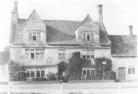 green in Broadway. They acquired this along with
a l4th-century monastic ruin known as Abbot's
Grange which they restored and converted into a studio. Millet
was soon joined by a host of English
and American friends, namely the painters
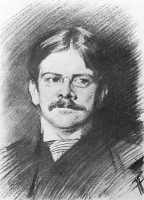
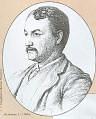
Edwin Abbey, Sargent, George Boughton, Alfred Parsons (illustrator of Dickens' work and renowned 19th-century artist and garden designer), Edwin Blashfield,
the English illustrator Fred Barnard and the writers
Henry James and Edmund Gosse.
green in Broadway. They acquired this along with
a l4th-century monastic ruin known as Abbot's
Grange which they restored and converted into a studio. Millet
was soon joined by a host of English
and American friends, namely the painters
Edwin Abbey, Sargent, George Boughton, Alfred Parsons (illustrator of Dickens' work and renowned 19th-century artist and garden designer), Edwin Blashfield,
the English illustrator Fred Barnard and the writers
Henry James and Edmund Gosse. bohemian
hospitality that was fashionable among artists at
this time. They were a strangely assorted company
colourful and noisy, but above all united
in intellectual and artistic interests. They frequently
shattered the calm of the village with their high spirits, as is
described here by Edmund Gosse: 'Nothing we do scandalizes the
villagers. Fred
Barnard, with an enormous stage slouch hat over
his shoulders, chased one of the Americans down
the village street, the man chased screaming all the
time and trying to escape up lamp-posts and down
wells. Not a villager smiled ... Whatever we do or
say or wear or sing they only say "Them
Americans is out again".'
bohemian
hospitality that was fashionable among artists at
this time. They were a strangely assorted company
colourful and noisy, but above all united
in intellectual and artistic interests. They frequently
shattered the calm of the village with their high spirits, as is
described here by Edmund Gosse: 'Nothing we do scandalizes the
villagers. Fred
Barnard, with an enormous stage slouch hat over
his shoulders, chased one of the Americans down
the village street, the man chased screaming all the
time and trying to escape up lamp-posts and down
wells. Not a villager smiled ... Whatever we do or
say or wear or sing they only say "Them
Americans is out again".'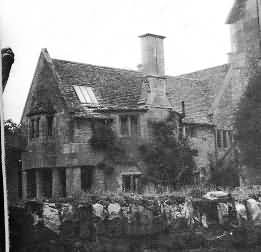 Letters written by the Broadway residents and
visitors are our main source of information about the high-spirited lifestyle there. A certain amount of serious work was done, but this was well interspersed with tennis, tea, musical evenings, dances and tennis again. In 1886, Gosse wrote a description of
Letters written by the Broadway residents and
visitors are our main source of information about the high-spirited lifestyle there. A certain amount of serious work was done, but this was well interspersed with tennis, tea, musical evenings, dances and tennis again. In 1886, Gosse wrote a description of 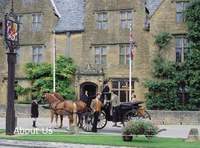 When visitors came to stay, they frequently lodged
at the Lygon Arms, a dominating and beautiful former 16th-century manor house at the edge of the Green. Sargent stayed there at first, as did Abbey, who used some of the details of the building in the background to his illustrations to Goldsmith's play She Stoops to Conquer.
When visitors came to stay, they frequently lodged
at the Lygon Arms, a dominating and beautiful former 16th-century manor house at the edge of the Green. Sargent stayed there at first, as did Abbey, who used some of the details of the building in the background to his illustrations to Goldsmith's play She Stoops to Conquer.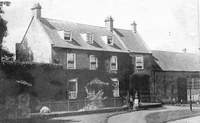
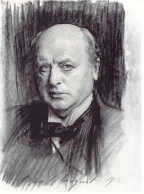 Perhaps Henry James, who had throughout remained characteristically a little detached from the others, should have the last word about Broadway before the idyll was finally shattered: 'furnished apartments are useful to the artist, but a furnished country is even more so... This is the great recommendation of Broadway: everything in it is convertible . . There is portraiture in the air and composition in the very accidents. Everthing is a subject or an effect....It is delicious to be at Broadway and not have to draw.'