 |
| The Local Time is Wednesday, 17-Apr-2024 04:06:36 CEST |
Famous American People with Cotswold Connections |
|
|||
| YOU ARE HERE: Main Home Page >Famous People > American Connections |

|
|
|
|||||||||
American Cotswold ConnectionsHere is a collection of famous American people who are connected to the Cotswolds.
|
|||||||||
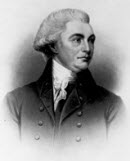
William Bingham (1752 to 1804)William Bingham was an American statesman from Philadelphia, Pennsylvania. He was a delegate for Pennsylvania to the Continental Congress from 1786 to 1788 and served in the United States Senate from 1795 to 1801. He helped to found the Bank of North America, the first bank of the new nation, in 1781. William Bingham has a memorial in Bath Abbey of figures of Angels on each side of a wall mounted plaque. He has been described as one of the richest men of his time in the Pennsylvania state, having made his fortune through ownership of Privateer’s and commerce, he served as Speaker in its House of Representatives in 1791. Bingham died on February 7, 1804 in Bath, England and is interred in Bath Abbey. His estate was not settled until 1960. |
 |
||||||||
| back to top | |||||||||
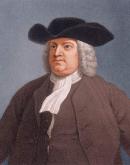
William Penn (1644 to 1718)William Penn (Junior), was born in London in 1644. He became a leading and most troublesome Quaker. In 1681 King Charles II granted him a province in America as redemption of the debts owed by the King to his late father. William had chosen the name "Sylvania" but the King insisted that it be prefaced by "Penn" in honour of his father Admiral Sir William Penn. Penn was both the founder and first governor of Pennsylvania. |
 |
||||||||
| back to top | |||||||||
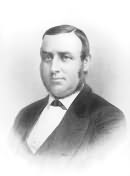
George W Childs (1829 to 1894)George W. Childs of Philadelphia, an American publisher in 1887 he donated a William Shakespeare's memorial in the form of a Fountain Clock tower, which stands in the market square at Stratford-upon-Avon to mark Queen Victoria’s Golden Jubilee. He was a well known philanthropist, he also erected memorial windows in Westminster Abbey to the poets William Cowper and George Herbert. The large Gothic Clock Tower, with sculptures of eagles and lions is an imposing example of design and architecture of the period. Not only will you see American Eagles but also English Lions and a fairy from A Midsummer Night's Dream as part of the stonework. It was unveiled by the actor Sir Henry Irving. |
 |
||||||||
| back to top | |||||||||
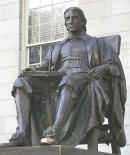
John Harvard (1607 - 1638)Harvard House in Stratford-upon-Avon with its beautiful carved timbers was built by Thomas Rogers after a fire destroyed the previous house in 1596. In 1605, his daughter Katherine married Robert Harvard and it was their son John, born in 1607, who emigrated to America. Harvard University is named after John Harvard. |
 |
||||||||
| back to top | |||||||||
Nancy Lancaster (1897 – 1994)
Born Nancy Keene Perkins at her maternal grandfather's farm, Mirador, in Greenwood, near Charlottesville, Virginia, and brought up in Richmond and New York City, she was the elder daughter of Thomas Moncure Perkins, a Virginia cotton broker, and his wife, Elizabeth Langhorne. Nancy Lancaster was also a niece of Nancy Astor, the British politician, and of Irene Gibson, the wife of the artist Charles Dana Gibson. Her cousin Joyce Grenfell was a celebrated British actress. In the 1920s, as Nancy Tree, she was principally responsible for creating the "English country house look" - a romantic, patrician, uncluttered style which has had a profound effect on English interior design, notably through the influence of her company Colefax & Fowler. A woman of wit, style and beauty, she looked like a Gainsborough duchess and was the star of many anecdotes - "Paint it the colour of elephant's breath," she once commanded a decorator. All her work was notable for its sense of scale, boldness, wit and mellowness. Her houses seemed to convey the essence of all that was best in English country life. She was totally committed to England, and at the beginning of the Second World War became a British citizen out of solidarity, but was American by birth, a survivor of the world of Henry James.
Winston Churchill used to spend his weekends there during the Second World War, when the danger of bombing prevented him going to Chequers or Chartwell. But the Trees' marriage was dissolved in 1947, and their idyll at Ditchley Park came to an end. The next year she married Lt-Col Claude Lancaster, MP, the owner of Kelmarsh; they soon separated. |
|||||||||
| back to top | |||||||||
Consuelo VanderbiltConsuelo Vanderbilt (1877-1964) was married to the 9th Duke of Marlborough (that made her the Duchess of Marlborough) and was Winston Churchill's cousin by marriage. They married on 6 November 1895 at St. Thomas Church on Fifth Avenue in the most prestigious Gilded Age wedding. Her father gave the Duke $2.5 million, which he desperately needed to make repairs and renovations to Blenheim Palace. Consuelo did not want to marry the Duke. Her mother (Alva Vanderbilt) insisted going so far as to feign illness. The marriage proved a disaster. The Duke of Marlborough was ill-tempered and critical of Consuelo. They had two sons, but the Duke made no real effort to make the marriage work once he got his hands on some of the funds he wanted to renovate Blenheim Palace, the family home. He was increasingly critical of everything she attempted. The relationship was not helped by the fact that her mother-in-law despised her. The boys came soon after the marriage. Thereafter the two were increasingly estranged. They separated after 11 years of marriage in 1906. She had a more liberal outlook than her husband and changed with the times. She emerged as a popular personality in Edwardian England while her husband became increasingly withdrawn. Her success was no mean feat in a society which was basically hostile to American heiresses. (Consuelo and Jennie Jerome were the notable exceptions). Winston Churchill and other notables were friends. Consuelo found her niche with philanthropy. She emerged as a conservative feminist and helped run several projects for the underprivlidged. Even so, she remained a snob particularly with her anti-Semitism leanings. She was a popular public speaker on both topics. She later married French aviator Jacques Balsan in 1921. For further information and portrait by John Singer Sargent. |
|||||||||
| back to top | |||||||||
Jeanette JeromeLady Randolph Churchill (9 January 1854 – 29 June 1921), born Jeanette Jerome, was the American-born wife of Lord Randolph Churchill and the mother of British Prime Minister Winston Churchill. The daughter of Leonard Jerome, a prominent New York financier and his wife Clarissa, who was herself the daughter of a landowner and state assemblyman. Rumour had it that Jennie was named after the Swedish soprano Jennie Lind. The dark-haired, doe-eyed Jennie was one of the most notable and fashionable beauties of her day and her goings-on were anxiously followed by those interested in society gossip. It was at Cowes in 1873 that Jennie met the man who would change her life, Lord Randolph Spencer-Churchill, the second son of the Duke of Marlborough. Randolph was 24 at the time and three days after they met, they were engaged which was a scandal not only for the short amount of time they had known each other but because Randolph had asked Jennie before talking it over with his parents or asking her mother. It was for her first marriage that she is primarily remembered. In 1874, Jennie Jerome wed Lord Randolph Churchill, becoming the titled "Lady Randolph Churchill". Her greatest claim to lasting fame, however, is that one of the two sons she bore her husband turned out to be Winston Churchill. Jennie was definitely a "remote" type of mother, common in society women of that time, but her son Winston had tremendous affection for her. Jennie was in the forerunner of the Buccaneers, those American women who came to England and married titles. Around the time of her marriage, two other American women had made grand matches, including Consuelo Yznaga (who Edith Wharton immortalized as Conchita Closson in The Buccaneers) and Minne Stevens, who married a good friend of the Prince of Wales, Sir Arthur Henry Fitzroy Paget. Even Randolph's brother wasn't immune, after his divorce, he later married the rich American widow, Lily Hammersly, and his son, Sunny (9th Duke of Marlborough), in 1895 married Consuelo Vanderbilt, bringing much needed money to Blenheim Palace for the desperate renovations required. |
|||||||||
| back to top | |||||||||
|
|||||||||
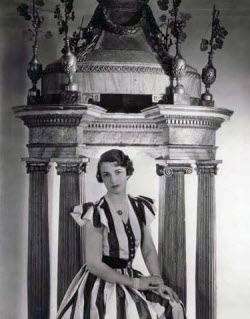 Nancy Lancaster was a crucial figure in 20th-century interior English Country House "design look".
 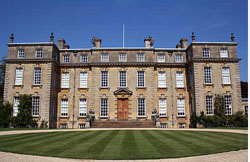 But it was at