Avebury is one of the 14 British World Heritage sites and includes the largest stone circle in Europe. It also has the largest prehistoric mound - in the form of Silbury Hill, as well as one of the longest burial mounds.
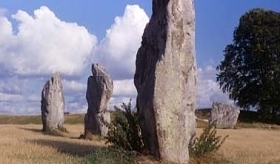
Mostly dating to around 2,600-2,500 B.C.E., the Avebury complex, which covers about 28 acres and is partially overlapped by the village, comprises a huge circular earthwork ditch, originally about 30 feet deep, and bank about a quarter of a mile in diameter which encloses an outer circle of standing stones. Within this outer circle are two inner circles, both about 340 feet in diameter. The northern inner circle, of which only a few stones remain, apparently consisted of two concentric circles; an inner one of 12 stones and an outer one of 27 stones.
At the centre of the northern circle stood a trio of very large stones, two of which survive, called "the Cove." At the centre of the southern circle stood a tall stone over 20 feet in length called "the obelisk." This stone has now gone altogether, its site, as with the other missing stones at Avebury, is now marked by a concrete pillar.
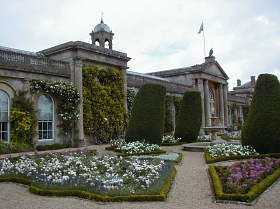
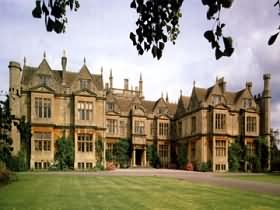
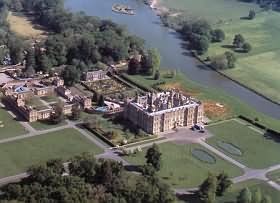
Purchased by the 1st Earl of Shelburne (1705–1761) in the mid 18th century, Bowood House and Gardens have been improved by successive generations up to the present day. Many famous architects and garden designers have been employed, including Henry Keene, Robert and James Adam, ‘Capability’ Brown, C.R. Cockerell and Sir Charles Barry.A visitor to Bowood today will see fine 18th-century architecture and splendid interiors: the Adam Orangery, the Chapel and Library by C.R. Cockerell, the New Hall, the Sculpture Gallery and the Laboratory where Dr Joseph Priestley discovered oxygen in 1774. There is also a series of exhibition rooms with a wealth of fine furniture, costumes, pocelain, jewellery and paintings on display. Outside, the house is surrounded by ‘Capability’ Brown’s stunning park; there are magnificent formal gardens, a ‘Picturesque’ rockwork garden; and the renowned pinetum and arboretum The first house at Bowood was built c.1725, on the site of a hunting lodge in the former Royal Forest of Chippenham. The house and park were bought by the 1st Earl in 1754, who employed architect Henry Keene to extend the house, including an imposing portico, and to build an extensive E-shaped service wing behind it.
Facilities
Historic House, Gardens, Restaurant, Tea Room, Picnic Area, Orangery,Childrens Play Area, Car Park, Private Group Tours, School Tours Available, Bowood has been a popular choice as a location for various films.
Location
Contact
The Estate Office,
Derry Hill
Calne,
Wiltshire,
SN11 0LZ
Tel:+ 44 (0)1249 812102
Fax:+ 44 (0)1249 821757
Admission 2006 Season
Opening
House and Gardens
Adults: £7.50
Senior Citizens: £6.50
Children 2 - 4 yrs: £3.80
Children 5 - 15 yrs: £5.00
Family Ticket (2 adults + 2 children) : £22.50
Group Rates (groups of 20 or more)
Adults: £6.50
Senior Citizens: £5.50
Children 2 - 4 yrs: £3.00
Children 5 - 15 yrs: £4.00
Daily from Saturday 1st April to Tuesday 31st October 2006 inclusive
House 11am - 5.30pm
Grounds 11am - 6.00pm
Restaurant & Coffee Shop 11am - 5.15pm
Closing times an hour earlier after the autumn clock change
(Rates and opening Times may vary on weekdays, outside school holidays)
Rhododendron Walks 11am - 6pm (open daily from late April to early June
The charge for the Rhododendron Walks is reduced by £1 per person if combined with a visit to Bowood House and Gardens on the same day.
The earliest known records of a house at Corsham date back to 978 when the house was a summer palace for the Kings of Wessex. The property subsequently became part of the dowry of the Queens of England until Elizabeth I granted a leasehold interest following which Thomas Smythe (one of her subjects) erected an Elizabethan manor house on the site.
Corsham Court is the home of James Methuen-Campbell, the eighth generation of the Methuens to live there. He succeeded to the Corsham Estate on the death of the Seventh Baron Methuen in 1994. Since that time, conditional exemption from Inheritance Tax has been allowed by H.M. Treasury with respect to the library, various paintings and furniture in the private wing of the Court. Special guided tours will be taken of the Breakfast Room and Library enabling visitors to view these collections.
The Court is used by the Bath Spa University and, as an administrative Centre, by the The National Society for Education in Art and Design and the Duke of Edinburgh's Award Scheme. The University periodically runs courses at Corsham in conjunction with a number of American Universities, for which the Court is regarded as a European base.
Wheelchair users (accompanied by one carer or companion) may visit the gardens free of charge during opening hours. They regret that motorised wheel chairs cannot be accommodated in the house, although a non-motorised pushed wheelchair is available to be borrowed without charge. Wheelchair users should bear in mind that the Staterooms are on the ground floor, but that this is at a higher level than the entrance. A platform lift is made available to reach the necessary level, where the pushed wheelchair may be used. Disabled visitors should drive up to the front door of the house for direction to parking facilities.
Location
Contact
In Corsham and sign posted off the A4 some 4.5 miles west of Chippenham (Junction 17 off M4) in North Wiltshire
Guided tours (max. group size 15) of the Breakfast Room and Library in the private wing will be taken at 2.00pm and 3.30pm:
30th, 31st May and 1st, 3rd, 4th June 2006
8th, 9th, 10th, 12th, 13th August 2006.
Groups of 15 or more at other times throughout the year by prior appointment only.
Guided tours of the Breakfast room and Library will be charged at an additional £2.00 per person.
Admission
Opening
House and gardens
Adult £6.50
Child £3.00 £1.50
O.A.P. £5.00 £2.00
Gardens only
Adult £2.50
Child £1.50
O.A.P. £2.00
Group £5.00
incl. guided tour
of Staterooms On appln.
Summer:Open 20th March - 30th September daily except Mondays and Fridays from 2 'til 5.30 pm. (Last entry 30 mins. before close.)
Winter:From 1st October - 19th March open weekends only 2 'til 4.30pm but closed December. (Last entry 30 mins. before close.)
Spectacular late 17th-century mansion, garden and deer park,
William and Mary mansion nestling in an ancient deer park ,
Lavish 17th-century collections reflect the fashion for all things Dutch,
Victorian domestic quarters give an insight into life below stairs,
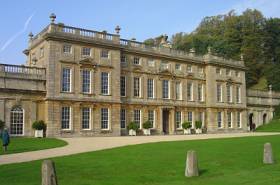
Elegant formal gardens, woodland, and lakes to explore Dyrham Park is a beautiful baroque country house set in 110 hectares (274 acres) of garden and parkland, designed by Talman for William Blathwayt, Secretary at War during the reign of William III. As a consquence of Blathwayt's royal connections and influential uncle, Thomas Povey, the house was to become a showcase for his taste in Dutch decorative arts. The collection includes delftware, paintings and furniture; later 18th-century additions include furniture by Gillow and Linnell. Amongst the restored Victorian domestic rooms are kitchens, tenants' hall and delft-tiled dairy.The house is set in 274 acres (1.1 km²) of gardens and parkland. It was commissioned from William Talman by William Blathwayt, who was Secretary at War to William III, and is known for a collection including important examples of Dutch decorative arts and for 18th century additions including furniture by Gillow and Linnell. The property is now owned by the National Trust which took it over from the Government in 1961, who had purchased it from the Blathwayt family in 1956.
Dyrham Park was one of the houses used as sets for the 1993 Merchant Ivory film The Remains of the Day (others included Badminton House and Powderham Castle).
Location
Contact
Dyrham Park
Dyrham, nr Chippenham, Gloucestershire SN14 8ER
Admission prices£9, child £4.50, family £22.50. Garden and park only: £3.50, child £1.80, family £8. Park only (on days when house and garden closed): £2.30, child £1.10, family £5.20
The house and garden are open to the public from mid-March to the end of October, and the park all year, from late morning to about 5 pm. There is a bus service from Bath Spa railway station.
House
24 Mar–29 Oct '06 12–4 Mo Tu Fr Sa Su
Garden
24 Mar–29 Oct '06 11–5 Mo Tu Fr Sa Su
Shop/tea-room
24 Mar–29 Oct '06 11–5 Mo Tu Fr Sa Su
4 Nov–17 Dec '06 11–4 Sa Su
Park
All year 11–5 Mo Tu We Th Fr Sa Su
Open BH Mons and Good Fri: 11-5. Last admission 45mins before closing
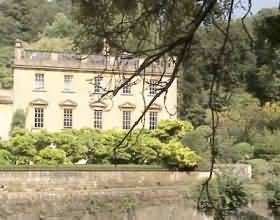
The Peto Garden at Iford Manor in Wiltshire won the Historic Houses Association/Christie's 1998 Garden of the Year Award given in recognition of a garden, outstanding both for its horticultural and public interest. Iford has been occupied since Roman times and the manor house sits idyllically by the Frome river in this steep-sided valley. Iford Manor is mediaeval in origin, the classical facade being added in the eighteenth century when the hanging woodlands above the garden were planted.
In 1899, Harold Ainsworth Peto discovered Iford and the individuality of the garden owes everything to his inspiration and eye for combining architecture and plants. The house is built into the steep hillside, so terracing forms an important element of the design. Peto was particularly attracted by the charm of old Italian gardens, where flowers occupy a subordinate place amongst the cypresses, broad walks, statues and pools.
A visit to the Peto Garden at Iford includes delightful features such as the Loggia, the Great Terrace, the Casita and the largest of Peto’s garden buildings, the Cloisters. This building is the location for most of the recitals and operas that take place throughout the summer as part of the Iford Arts programme.
Location
Contact
The Peto Garden at Iford Manor Bradford on Avon, Wiltshire, United Kingdom
Admission Adults £4.50 OAPs, Students and Children over 10 years £4.00 Children under 10 years no charge (weekday visits preferred). Groups £5.00 per person (all categories). Outside normal opening hours by prior arrangement only.
Opening Times During April & October on Sundays and Easter Monday between 2pm - 5pm. From May to September daily between 2pm - 5pm except on Mondays and Fridays. Home made teas available from May to August at weekends and on Bank Holidays.
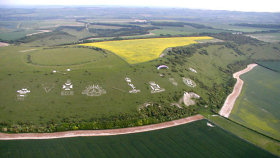
Situated on the Downs of Wiltshire at Fovant remarkable chalk carvings are to be seen.These extraordinary carvings can be observed from the A30 Shaftesbury to Wilton road.It was during World War I (1914/1918) that there was a need to establish training camps for troops engaged in the battlefields of France.
One of the areas chosen was at the village of Fovant and it was here that many thousands of men received their training. The camp had hospital facilities and it was here that soldiers returning from the fighting were treated for their wounds, many failed to survive dying from either wounds or disease.......
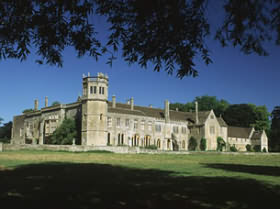
Lacock Abbey today shows four architectural styles which combine to give the whole building a fine romantic beauty.
The Abbey was founded in 1232 and was used as an Augustinian nunnery until 1539 and the Dissolution of theMonasteries by Henry VIII. Parts of the nunnery, including the cloisters, chapter house and sacristy, were preserved when the building was converted into a private residence in 1550.
In 1754 John Ivory Talbot employed the architect Sanderson Miller to make alterations to the house in the Gothic revival style. In 1828 further changes were made to the building. The most famous member of the Talbot family was William Henry Fox Talbot who invented the photographic negative at Lacock Abbey. The subject of Fox Talbot's earliest negative of 1835 was an oriel window in the south gallery.
There is a Museum of Photography in the gatehouse which includes displays Fox Talbot's experiments. The house remained in the hands of the Talbot family until 1944 when it was given to the National Trust, together with nearly all of neighbouring Lacock village.
In Brief
Medieval cloistered abbey converted into a fine country house
Newly-restored botanic gardens
Fascinating museum dedicated to the 'Father of Modern Photography'
Uniquely preserved cobbled country village
Location for films, 'Harry Potter', 'Pride and Prejudice', 'Moll Flanders' and 'Emma'
Abbey, museum, cloisters & grounds: £7.80, child £3.90, family (2 adults & 2 children) £20. Groups £7, child £3.50. Garden, cloisters & museum: £4.80, child £2.40, family (2 adults & 2 children) £12.20. Groups £4.30, child £2.20. Abbey, cloisters & grounds: £6.30, child £3.20, family (2 adults & 2 children) £16.10. Groups £5.70, child £2.80. Museum (winter): £3.40, child £1.70, family (2 adults & 2 children) £8.70. Groups £3, child £1.5
Museum, Abbey & grounds closed Good Fri, but High St shop open. Museum (only) open winter weekends (11-4), but closed 23 - 31 Dec inc. High St shop closed 25, 26 Dec & 1 Jan 07. Last admission 30mins before closing
Museum
25 Feb–29 Oct '06 11–5:30 Mo Tu We Th Fr Sa Su
4 Nov–17 Dec '06 11–4 Sa Su
6 Jan–18 Feb '07 11–4 Sa Su
Grounds/cloisters
25 Feb–29 Oct '06 11–5:30 Mo Tu We Th Fr Sa Su
Abbey
25 Mar–29 Oct '06 1–5:30 Mo We Th Fr Sa Su
Shop
25 Mar–29 Oct '06 10–5:30 Mo Tu We Th Fr Sa Su
30 Oct–31 Dec '06 11–4 Mo Tu We Th Fr Sa Su
Longleat has worked hard to create a reputation as a major family attraction, with a plethora of theme park activities and the world-famous safari park, but at its core the estate still revolves around the superb Elizabethan country house.The grand front facade of Longleat from the drive
The symmetrical three-story house was built by Sir John Thynne, who employed Robert Smythson (also responsible for Hardwick Hall) and French architect Allan Maynard. The house stands as a splendid focal point in the 900 acres ofparkland landscaped by Capability Brown. Thynne finished his grand home in 1580, shortly before his death. Though the exterior maintains its exquisite Tudor facade, the interior has been much altered to follow the changing dictates of comfort and fashion. The great hall still boasts its Tudor hammerbeam roof and carved fireplace, but the rest of the furnishings are Victorian. Much of the interior decoration is in opulent Italian style, modeled after estates in Venice and Genoa. There are superb Flemish tapestries, but the collection of fine period furniture is even better. Fine art dating as far back as the 16th century hangs in gilded splendour on the lavishly decorated walls. The original long gallery (90 feet long) has been converted into a saloon. The rear of the house, with gardens in the foreground family portraits in the great hall trace the Thynne family back to Tudor times, and more modern murals by the 7th Marquis are on display in the West Wing.
THE MARQUIS OF BATH
One of the many "attractions" that lures visitors to Longleat is the possibility of meeting the colourful owner, the bohemian Marquis of Bath. The Marquis, aka Alexander Thynn, has been known to spontaneously pop out of his private quarters to lead groups around the home he loves.
Location
Contact
Longleat,Warminster.
Wiltshire.
BA12 7NW
Tel: +44(0)1985 844400
Fax: +44(0)1985 844885
Admission
Opening
Grounds & Gardens only: Adult: £3; Child (3-14yrs): £2; Over 60's: £2
Passport Ticket (all 12 attractions): Adult: £19; Child (3-14yrs): £15; Over 60's: £15
Other prices - see website
Open daily 11th Feb - 19th Feb;
Open weekends only 25th Feb - 26th Mar
1st Apr - 5th Nov; Daily
Longleat House: from 11 Feb, open daily (excluding Christmas Day) 10am - 5.30pm
Safari Park: from 11 Feb, open daily; Mon - Fri; 10am - 4pm; 10am - 5pm on weekends, BH and during state school holidays. All other attractions 11am - 5.30pm
Longleat House is widely regarded as one of the best examples of high Elizabethan architecture in Britain and one of the most beautiful stately homes open to the public.
In 1966 Longleat opened the first Safari Park outside of Africa. Today it is difficult to imagine the furore aroused when Longleat’s plans for a 100-acre lion reserve were made public.
There were dire warnings of big cats running amok in the Wiltshire countryside, local clergymen were up in arms and there were even questions asked in the Houses of Parliament.
In spite of the fears however the concept of a drive through safari park proved hugely popular and forty years on, Longleat Safari Park remains one of the country’s leading wildlife attractions.
But that’s not all… Longleat now encompasses a wide range of attractions to suit visitors of all ages… find yourself going round in circles in the Longleat Hedge Maze, journey on the Safari Boats for a sea-lion escorted cruise, enjoy a fun-packed ride on the Longleat Railway, let the kids let off steam in the Adventure Castle and more… your day at Longleat will never be long enough!
Location
Contact
Longleat,Warminster.
Wiltshire.
BA12 7NW
Tel: +44(0)1985 844400
Fax: +44(0)1985 844885
Admission
Opening
Grounds & Gardens only: Adult: £3; Child (3-14yrs): £2; Over 60's: £2
Passport Ticket (all 12 attractions): Adult: £19; Child (3-14yrs): £15; Over 60's: £15
Other prices - see website
Safari Park: from 17 Feb, open daily; Mon - Fri; 10am - 4pm; 10am - 5pm on weekends, BH and during state school holidays. All other attractions 11am - 5.30pm
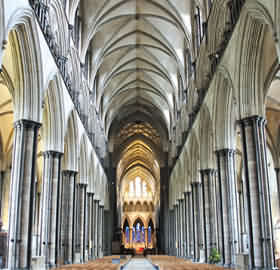
Salisbury is unique amongst medieval English cathedrals, built within one century with no substantial later additions. The
building itself is remarkable, a testimony to the faith and practical skills of those who erected it.
But it is much more than an historical monument. It is the Cathedral Church of the Salisbury diocese and so the Mother Church of several hundred parishes in Wiltshire and Dorset. It is a
centre of pilgrimage for hundreds of thousands of visitors every year. Every day, week in week out, for century after century, God is worshipped here. Above all it is a place of prayer.
Discover over 750 years of history, including Britain's tallest spire, the world's best preserved original Magna Carta and Europe's oldest working clock, on a tour with one of our volunteer
guides. Built between 1220 and 1258, in one architectural style, Salisbury is Britain's finest 13th century Gothic Cathedral.
A beautiful and historic building, Salisbury Cathedral is an impressive stage for concerts and major services, yet also a place for private prayer and reflection. The Cathedral and the Close
are visited by over 500,000 people a year. Many come as tourists or to worship, while others attend some of the many events taking place here. The Cathedral is open to all and seeks to provide
facilities for, and a warm welcome to our many visitors.
Visitor Services
Contact
33 The Close,
Salisbury, SP1 2EJ
Tel: 01722 555120
Tel: +44(0)1985 844400
Fax: +44(0)1985 844885
Admission
Opening
Requested Voluntary Donations
Adults £5.00
Seniors / Students £4.25
Children (5-17) £3.00
Families £12.00
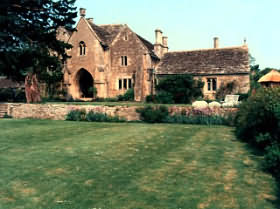
Sheldon Manor is Wiltshire's oldest inhabited manor house with a 13th century porch and a 15th century chapel. Gardens with ancient yews, a mulberry tree and a profusion of old fashioned roses blooming in May and June. The earliest documentary evidence is from the Hundred Rolls 803AD. There are records of nearly all the occupiers of the Manor since 1282 AD, when Sir Geoffrey Gascelyn was given six oak trees from the forest of Chippenham for timber. The great porch dates from this period and is considered to be one of the finest still standing in the country today. The chapel dates from the first part of the 15th century and the main part of the house as it stands today was rebuilt around 1660 AD. We are fortunate to have a more comprehensive account of the history of the manor, which is available on request.
The gardens are old and romantic with many trees and plants of interest to keen gardeners. There are numerous old roses blooming in great profusion from late May through June and July. A programme of restoration of these beautiful gardens began last year.During the summer we will have a small but interesting collection of plants and herbs for sale.
Location
Contact
Sheldon Manor,
Chippenham,
SN14 0RG,
Wiltshire
Tel: (01249) 653120
Fax: (01249) 461097
1.5 miles west of Chippenham, signposted from A420 and from A4 eastbound. M4 exit 17, 4 miles.
Morning coffee, lunches or afternoon tea would be available by prior arrangement.
Coaches welcome but please give notice.
Admission
Opening
Adults: £4.50
Children under 12: Free
Concessions for Senior Citizens and Students
bookings for groups of 10 or more, for times outside of our normal opening hours.
Easter through to October on Thursday and Sunday afternoons each week.
Sunday, Thursday and Bank Holidays from Easter Sunday to October
2.00 - 6.00pm
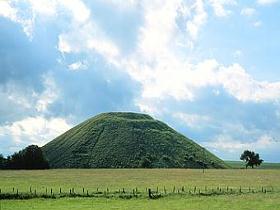
Silbury Hill, part of the complex of Neolithic monuments around Avebury in Wiltshire (which includes the West Kennet long barrow), is the tallest prehistoric man-made mound in Europe and one of the world's largest. On a base covering over 2 hectares (5 acres), it rises 39.6m (130ft) high. It is a display of immense technical skill and prolonged control over labour and resources. Archaeologists calculate that Silbury Hill was built about 4600 years ago and that it took 18 million man-hours to dump and shape 248,000 cubic metres (8.75 million cu ft) of earth on top of a natural hill. Every man, woman and child in Britain today could together build such a mound if they each contributed one bucketful of earth.
The base of the monument is 167m (550ft) in diameter and it is perfectly round. Its summit is flat-topped and 30m (100ft) wide. We know that the construction took two phases: soon after work was started, a re-design was ordered, and the mound enlarged. It is constructed in steps, each step being filled in with packed chalk, and then smoothed off. There have been three excavations of the mound: the first when a team of Cornish miners led by the Duke of Northumberland sunk a shaft from top to bottom in 1776, another in 1849 when a tunnel was dug from the edge into the centre, and a third in 1968-70 when professor Richard Atkinson had another tunnel cut into the base. Nothing has ever been found on Silbury Hill: at its core there is only clay, flints, turf, moss, topsoil, gravel, freshwater shells, mistletoe, oak, hazel, sarsen stones, ox bones, and antler tines.
Location
Contact:
English Heritage
North of the A4 between Marlborough and Beckhampton.
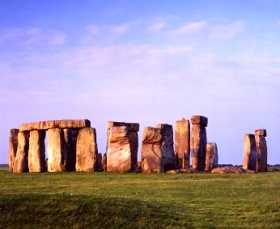
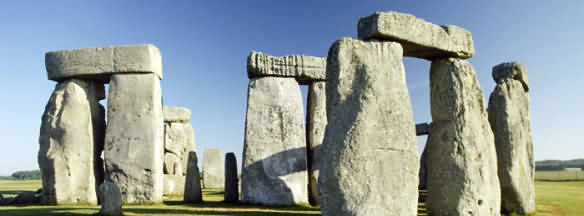
The great and ancient stone circle of Stonehenge is one of the wonders of the world. What visitors see today are the substantial remnants of the last in a sequence of such monuments erected between circa 3000BC and 1600BC. Each monument was a circular structure, aligned with the rising of the sun at the midsummer solstice. There has always been intense debate over quite what purpose Stonehenge served. Certainly, it was the focal point in a landscape filled with prehistoric ceremonial structures. It also represented an enormous investment of labour and time. A huge effort and great organisation was needed to carry the stones tens, and sometimes hundreds, of miles by land and water and then to shape and raise them. Only a sophisticated society could have mustered so large a workforce and the design and construction skills necessary to produce Stonehenge and its surrounding monuments.
Stonehenge's orientation in relation to the rising and setting sun has always been one of its most remarkable features. Whether this was because its builders came from a sun-worshipping culture or because - as some scholars have asserted - the circle and its banks were part of a huge astronomical calendar, remains a mystery. What cannot be denied is the ingenuity of the builders of Stonehenge. With only very basic tools at their disposal, they shaped the stones and formed the mortises and tenons that linked uprights to lintels. Using antlers and bones, they dug the pits to hold the stones and made the banks and ditches that enclosed them.
Location
Contact
2 miles West of Amesbury on junction of A303 and A360
Stonehenge Information Line
Opening
Daily - 16Mar t0 31 May 9.30am to 6pm; jun to Aug 9am to 7pm; 1 Sep to 15 Oct 9.30am to 6pm;16 Oct to 15 Mar 9.30am to 4pm. Closed 24, 25, 26 Dec and 1 Jan.
A county rich in
stone circles also has a Neolithic timber circle situated within the Stonehenge circle
and is just 2 miles Northeast of Stonehenge itself.
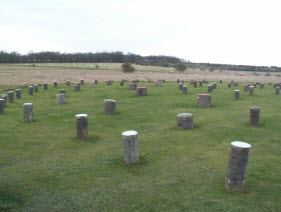
Discovered in 1925 Woodhenge was identified following an aerial survey of the area.
Besides finds of pottery and other ceramics the remains of a child were discovered
in the centre of the circle.
It is thought that the child was a human sacrifice, also found at the time of excavation
1926-1929 by Maude Cunnington*, the skeleton of a teenager, this discovery
was in an excavated ditch section.
The arrangements of the site align similarly to that of Stonehenge on Midsummer sunrise.
Woodhenge can be found near the junction of the A435 and B3086.
* Maud Edith Cunnington CBE.
A welsh born Archaeologist , she purchased the site of Woodhenge and gifted it to
the nation.
In 1931 she was elected President of the Wiltshire Archaeological and Natural History
Society.
Cotswolds.Info is the World's largest Internet resource for the unique Cotswolds region of England with over 650 webpages of authoriative information so please make use of this facility to help you get
the most
from your visit to this website.
This page last modified
Thursday, 12-Aug-2010 13:06:16 BST