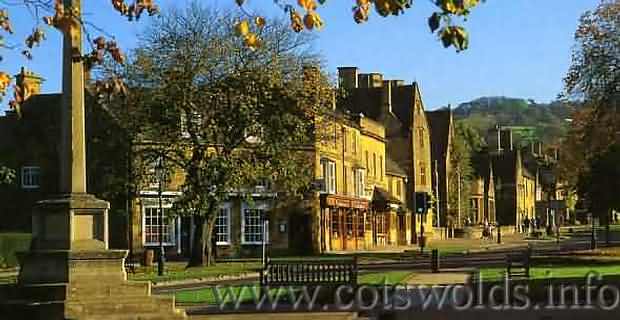
The Cotswolds, beneath the permanence and solidity, the forever exterior, is an idiosyncrasy borne out of the ancient traditions of the past centuries.
Court Jesters or Fools have their origins way back in time and records show that at the time of the Ming Dynasty (1368 -1644) that they occupied an important place within the court. In the UK they played an influential role in society and there is much evidence of this particularly during the mediaeval period.
Contrary to popular belief many Jesters were accomplished musicians, were articulate and well read, they also had acrobatic skills and were clever in sleight of hand tricks.
Very often their performances had political overtones, so it was not uncommon for them to lose their lives........
Crop fertility rites have been practised since Pagan times and these take many forms amongst these are Wassailing, Maypole dancing, Cheese Rolling, Well Dressing. All of these are carried out in most regions in the British Isles but particularly in the rural areas.
Wassailing, its origins lost in the mists of time are carried out by Morris dancers, the dances are to ensure the good fertility of crops and the dances vary from region. The mode of dress also varies.
Border Morris dancing differs very much in style, the dance is much more vigorous and the style of dress differs, an example in this case is the Silurian men, of Ledbury in Herefordshire, have their faces blacked
Maypole Dancing
Traditionally danced as the name suggests, in May.The pole was usually Hawthorn or Birch. In 1664 it was banned by an act of Parliament but revived upon the restoration of Charles II.The dance nowadays mainly involves children and takes the following form; a group of children encircle the pole to which ribbons are attached, each dancer holds a ribbon and dance in a circle around the pole, by dancing in rotation the ribbons wrap around the pole and an intricate pattern is formed......
It is unique in that the 14th century parish church of St Giles has the only Heart burial recorded in the Cotswolds; it is also unusual that a horse was buried in the churchyard. The church has much earlier origins and has a number of interesting memorials.
It was in 1294 that Sir Giles De Berkeley died and his heart was buried here, a memorial recording this was erected and can be seen.
His favourite horse, Lombard, was buried in the churchyard and his burial place can also be seen, this is marked by a stone, which is situated in the churchyard directly in line with the heart burial of his master in the south wall of the sanctuary beside the altar table........
Bourton-on-the-Water is the setting and football is the game but it's football with a twist. None of this nine a side business with 45 minutes in each direction played on a pretty pitch of green. This is six a side with 15 minutes in each direction played knee deep in a river.
The villagers of Bourton-on-the-Water have played football in the River Windrush every summer for 70 years. Goal posts are set up under the bridges and players brave the cold knee-deep water wearing nothing but bright coloured football shorts or fancy dress. Hundreds of spectators line the river banks and cheer for their team in a splashy, noisy affair that spills out onto a cheery fete on the village green........
Known locally as 'Pig-Face Day' villagers feast in the village hall after attending evensong at the Church of the Holy Cross at Avening.
The feast commemorates Queen Matilda, wife of William the Conquerer, who consecrated the church in 1080.
Pig Face Day, which takes place every two years in the Cotswolds village of Avening.
In the 12th century, Queen Matilda, wife of William the Conqueror, fell for Brictric, Saxon lord of Avening. When he would not return her feelings she had him thrown in a dungeon where he died. Overcome with guilt, she commissioned the building of Avening Church, and left money for a parish feast. On Pig Face Day, the head of a pig is carried into church on a plate, and a medieval fair takes place. It just would not happen on Kensington High Street.........
First held in 1863.Rev Thomas Keble established the tradition shortly after he had tidied up and formalized the village's main water supply in Wells Road, Bisley.The act of dressing wells with flowers has pagan origins, with its roots in the worship of the life-giving force of water but it could be that Rev Keble simply wished to mark the restoration of the wells. A similar ceremony takes place in the Derbyshire Peak District.
A short Church Service is followed by a Procession to the Wells where wreaths and posies are laid. The eldest 22 children in the Bluecoat village school carry the wreaths and garlands that head the procession and form the centrepiece of the ceremony. These consist of Stars of David, the letters A.D. and the year, letters spelling out the word 'Ascension' and five hoops........
Wassailing is the pagan fertility rites carried out on Fruit Trees to awake them and has been celebrated in England including the Cotswolds since the 1400's.
On the bitter cold and frost of a January night, with the stars sparkling overhead in a clear sky, small groups of people, muffled against the chill, process down darkened paths into orchards or to lone apple and pear trees. Some may process in silence, others with as much noise as they can muster. Some may carry torches or burning brands, others drums and shotguns or pots and pans. In each case, one of their number will be carrying a ceramic vessel filled with a steaming brew of beer or cider, carefully trying not to spill it, the steam from the bowl mingling with the cloudy breath of the participants ......
Aunt Sally is a traditional Cotswolds/Oxfordshire summer game, still played in many pubs in the area.
The dolly (a 10cm high ball or skittle) is placed on a metal spike normally around 3 foot tall. Players (typically two teams of 6) take it in turns to throw 6 sticks at the dolly. The aim is to knock the dolly off the spike, without hitting the spike.
It is a fun way to spend a lunchtime or an evening outside at a pub, as you discover just how hard it is! Well worth trying if you're in a pub with a court.
The game of Aunt Sally goes back at least as far as the 17th Century. It may have been introduced by Royalist soldiers during the English Civil war when Charles set up court in Oxford.
The game was traditionally played in British pubs and fairgrounds.........
Guisers' and Mummers' Plays, are short traditional verse sketches performed at Christmas and other festivals, and taken round pubs and private houses in return for cash and refreshments.
English folk play texts are mostly in rhyme, and they may include songs or even dances. The key character is the comical quack doctor, who is brought in to revive the loser of, say, the sword fight between a hero and an adversary. The heroes vary regionally and include Saint George, Robin Hood (in the Cotswolds) and in Scotland, Galoshin. The adversaries include Slasher (a soldier), Hector and the Turkish Knight. Additionally, there are a variable number of extra characters whose main purpose is to ask the audience for money, food and drink at the end of the performance. The most memorable of these characters is Beelzebub..........
From the moment the first morsels are thrown a thrill of excitement ignites the crowd. Hands outstretched, every man, woman and child battles for his share of the bounty. There are no rules in this battle - women hoist restricting skirts.........
Competitors sit on the edge of a steep slope, waiting for the guest roller to release a 7lb Double Gloucester cheese on the count of the Master of Ceremonies. They then race down the hill..........
The church yard is famous for its 99 yew trees and the many attempts to grow the hundredth have never succeeded.
The 'Clypping' comes from the Saxon word 'ycleping' meaning 'embracing' and the ceremony involves local children carrying nosegays..........
This event is a colourful procession of costumed villages led by the Mop Man who wields a wet mop to clear crowds, from the War Memorial to the Mayor's Pool. The Mayor and Queen are held shoulder high, but this dubious honour culminates in a dunking in the pond for the Mayor who is then washed with spring water........
Tetbury used to be a very important wool town and the origins of the races go back to the 17th century. Some say it was started by young drovers showing off to their girlfriends.....
USE GOOGLE'S POWERFUL ENGINE TO SEARCH THIS WEBSITE
Cotswolds.Info is the World's largest Internet resource for the unique Cotswolds region of England with over 650 webpages of authoriative information so please make use of this facility to help you get
the most from your visit to this website.