An Early Cotswold Visit
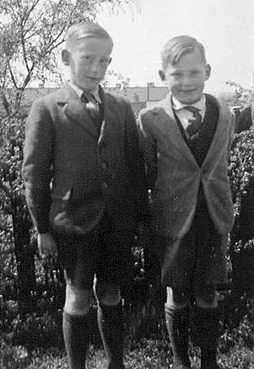 I was 14 years old when I first came to the Cotswolds. My brother, aged 12, and I set out from Leeds during the school summer holidays in 1952 for a cycle tour round England staying at Youth Hostels each night. During the next week we passed through Lincolnshire, circled round the Fens, went to Cambridge and then on into. Turning west, we cycled through Hertfordshire, wandered into Bedfordshire and Buckinghamshire to be followed by a two-day rest in Oxford. It rained for all of our sightseeing day so we retired to a cinema to dry out and get warm. It was still raining when we came out. I was 14 years old when I first came to the Cotswolds. My brother, aged 12, and I set out from Leeds during the school summer holidays in 1952 for a cycle tour round England staying at Youth Hostels each night. During the next week we passed through Lincolnshire, circled round the Fens, went to Cambridge and then on into. Turning west, we cycled through Hertfordshire, wandered into Bedfordshire and Buckinghamshire to be followed by a two-day rest in Oxford. It rained for all of our sightseeing day so we retired to a cinema to dry out and get warm. It was still raining when we came out.
We left the Youth Hostel the following morning to the news that a great flood had rushed through a small village in called Lynmouth, killing many people and destroying over a hundred houses. We took the Witney road but soon turned into country lanes to cycle through Eynsham and Bampton until we reached Burford. I remember riding down the High Street thinking how different this was to our West Riding towns. We set out towards Stow-on-the-Wold and by now it had turned into a nice sunny day. Just before turning left to Little Rissington, we watched Meteor jet aircraft taxying against the skyline at the R.A.F. station. We were flying down the hill towards Bourton-on-the-Water when my mileometer came off and I had to walk back up the hill to find it. While repairing and reattaching, I remember my brother finding the discarded outer skin of an adder in the grass.
We arrived in Bourton-on-the-Water at about 1pm and went into a riverside cafe' for bread rolls, biscuits and a cup of tea. Later we sat on the village green near the war memorial and gazed about us. What a wonderful place we had found. The river and its little bridges, the village green surrounded by lovely buildings all made a big impression on us both, as young as we were. On this sunny August afternoon, we had the village to ourselves, there was no one about, just my brother and I, and our two bicycles lying in the grass. We just had to buy and send a postcard home to our parents. It's hard to believe now but all the shops were closed for lunch, so we continued to sit on the grass until 2pm when we then strolled over to a little shop near the present day Model Railway and bought a card. I wrote describing this lovely place, but the picture on the front said more than I ever could. We had stamps with us so I only had to find a post box. I still have that postcard today. Twenty-one years later, quite by chance, my wife and I came to live in Bourton-on-the-Water, and we never left.
We cycled out of the village along Lansdowne to the Fosse Way, turned right and then left to pass above Lower Slaughter and Upper Slaughter and wonder at their names. After Naunton we went on to Andoversford and then into Cheltenham. We turned off for Prestbury and started to climb Cleeve Hill. It was hard going and we had to get off and push our bikes up the hill; the afternoon was very hot. Near the top, we were pleased to find the youth hostel. In my diary, I wrote that the stone built hostel was a nice place, so it's such a pity it closed a few years ago. After dinner, we climbed to the top of Cleeve Hill to look out across the Vale towards the Malvern Hills. It was a very clear sunny evening without a breath of wind and the views were magnificent.
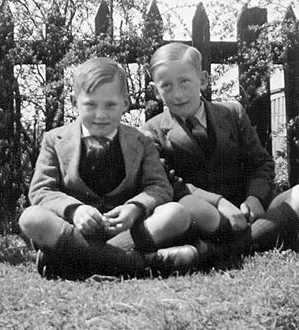 We left the hostel at about 10am after putting the freshly washed cutlery and the crockery away in a wooden cupboard, ready for the next hostel guests. It was downhill all the way to Winchcombe and the morning air made us quite cold. The road through the town was very narrow with the houses and shops crowding the narrow pavements on either side. It was exactly how I imagined a Gloucestershire town would look. That was not all because in a further 8 miles, just over the border in Worcestershire, we cycled up the high street of Broadway. Here was another lovely village, the sort of place that would always look welcoming, no matter what the season. On this quiet, sunny morning, like Bourton-on-the-Water, it left a picture that would remain in my mind. We left the hostel at about 10am after putting the freshly washed cutlery and the crockery away in a wooden cupboard, ready for the next hostel guests. It was downhill all the way to Winchcombe and the morning air made us quite cold. The road through the town was very narrow with the houses and shops crowding the narrow pavements on either side. It was exactly how I imagined a Gloucestershire town would look. That was not all because in a further 8 miles, just over the border in Worcestershire, we cycled up the high street of Broadway. Here was another lovely village, the sort of place that would always look welcoming, no matter what the season. On this quiet, sunny morning, like Bourton-on-the-Water, it left a picture that would remain in my mind.
From Willersey to Mickleton the Cotswold escarpment dominated the view to our right, but then we headed to Welford-on-Avon and the hills began to disappear behind us and it would be 20 years before I came this way again. Through the Vale of Evesham, the country lanes were lined with orchards and we found all kinds of fruit growing wild in the hedges. My brother thought we had arrived in Utopia. For the next two nights, we stayed at the hostel in Alveston, just outside Statford-on-Avon. We spent our days boating on the river and visiting all the Shakespeare houses, we even bumped into one of our school teachers on holiday with his wife. Ahead of us lay the country lanes of Warwickshire, Leicestershire and Nottinghamshire and it would be several more days before we safely reached Leeds and home. However, that's another story!
Thinking back to those days I realise now that we saw the last of old England. The motor car and lorry were about but in very small numbers as to make little impact on the towns and countryside we passed through. Villages were still relatively isolated and no out of scale housing developments had yet to spoil their character. Even a simple thing like those charming country cross roads had not had the corners rounded out to accommodate the car. Farmers still built haystacks and stood the corn in sheaves to dry. Even in Lincolnshire and Cambridgeshire they worked in small fields surrounded by thick hedges and a prairie was something to be found in North America. Finally, my brother and I were quite safe and our parents didn't think it necessary to try to restrict us. All they asked us to do was send a postcard home every day. In our childhood, we really did have freedom to roam, and to do it in safety.
|